Here's the short version.
- Drivers in Texas must take care to avoid people on foot and must yield in crosswalks in many situations.
- You may be covered by your own auto policy while you were nowhere near your car.
- Get medical care right away and keep anything damaged, like your bike or clothes.
- Shared fault applies. A driver may claim you darted out, so witnesses and video matter.
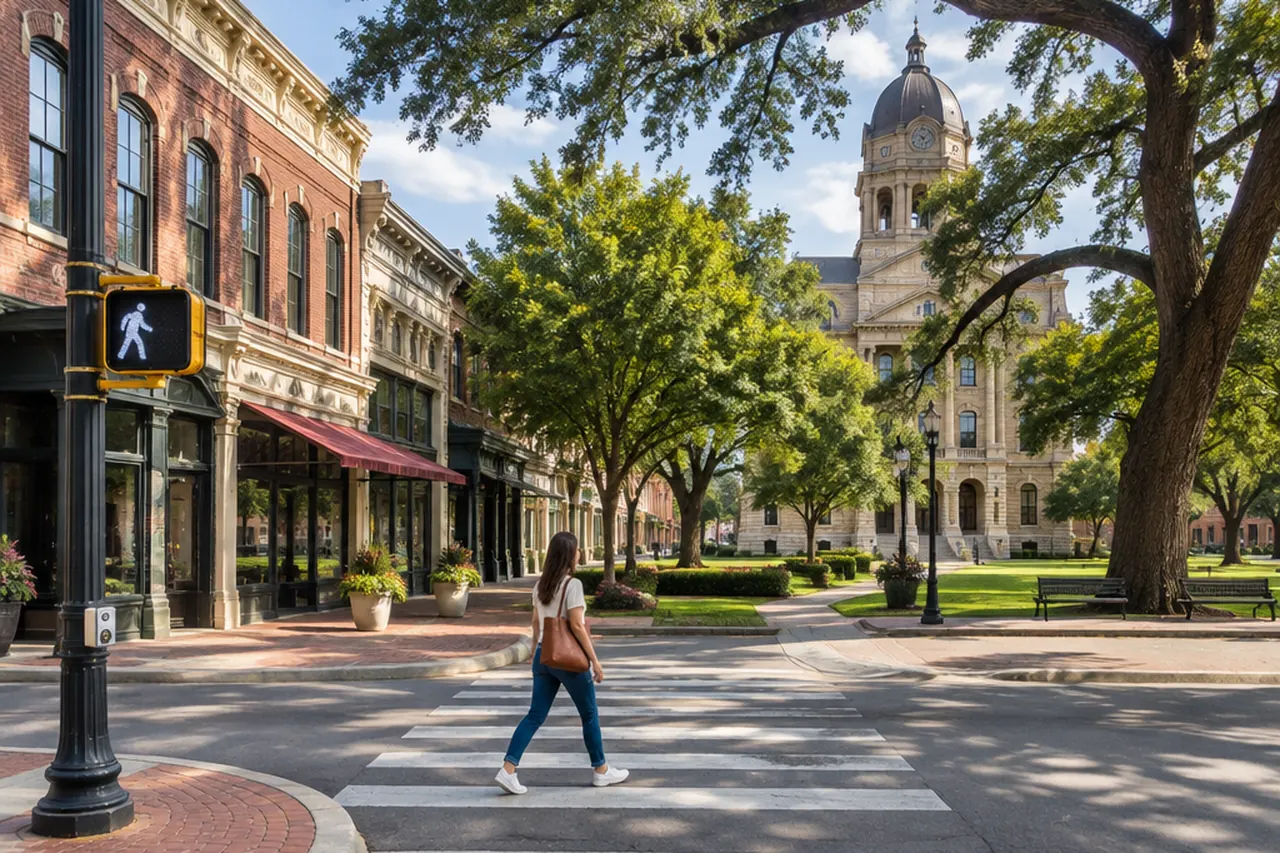
Sherman is a town where people walk and ride: students near Austin College, workers heading to a shift, families downtown, folks waiting for a ride along Texoma Parkway. Some streets were built for cars first, and fast traffic plus wide intersections can be a dangerous mix for anyone outside a vehicle.
Texas rules for people on foot
Pedestrian rights and duties are in Chapter 552 of the Texas Transportation Code. In general:
- Where no signal controls a crosswalk, a driver must yield to a walker on the driver's half of the road or near enough to be at risk.
- Pedestrians must obey walk signals and should not step suddenly into the path of a car too close to stop.
- Where there is a sidewalk, people should use it. Where there is not, walking facing traffic is generally expected.
- Every driver must use care to avoid hitting a pedestrian, regardless of the rules above.
Texas rules for cyclists
Texas generally treats a person on a bike like any other driver, rights and duties alike. Riders should go with the flow of traffic, follow signals and run lights after dark. Drivers must give cyclists room when passing and should check for bikes before turning or opening a door. Right turns across a bike's path are a frequent cause of crashes.
Common crash situations
- A driver turning left or right through a crosswalk while watching for cars, not people.
- A driver backing out of a parking spot at a store or apartment complex.
- A driver distracted by a phone, especially at night or in rain.
- A car drifting onto a shoulder where someone is walking on a road with no sidewalk.
- A hit-and-run, where the driver keeps going.
Which insurance may pay
This surprises people: your own car insurance may protect you even when you were walking or riding a bike.
- The driver's liability coverage usually pays first when the driver was to blame.
- Your own PIP may pick up medical bills and missed pay no matter who caused it, unless you declined it on paper. Some household members may be covered too.
- Your own UM/UIM coverage may help if the driver is uninsured, underinsured or never found.
- Health insurance may cover care, but may ask to be repaid later.
No car of your own? A relative's policy under the same roof may still apply. Ask about it. Our insurance claims guide has more.
For Austin College students and families
Students often walk or ride around campus and downtown. If a student is hurt, coverage may come from a parent's auto policy, the student's own policy or the driver's insurer. Our article on college student car accidents in Sherman walks through this.
Injuries and care
Pedestrian and bike crashes often cause leg and pelvis fractures, head injuries and spinal injuries. Go to the ER or see a doctor right away, and keep every record. Our car accident injuries guide explains how to document treatment.
When the driver blames you
A driver may say you were not in the crosswalk, wore dark clothes, or came out of nowhere. Texas's proportionate responsibility rule generally still allows recovery at 50 percent blame or less, minus your share. Witnesses, store or traffic cameras, and the position of the car and your belongings can help answer those claims.
Night, rain and rural roads
Many pedestrian and bike crashes happen after dark or in bad weather, when drivers have less time to react. That does not shift the blame to you. Drivers still have to drive at a safe speed for the conditions and keep a proper lookout.
Outside the city, many roads in Grayson County have no sidewalks and narrow shoulders. People walk along them to reach a mailbox, a store or a neighbor's house. Cyclists ride them for exercise. A driver who drifts onto the shoulder, passes too closely or crests a hill too fast can hit someone with little warning.
If you were hurt at night, note the lighting at the spot, whether you had lights or reflective gear, and where streetlights were or were not working. Photos taken at the same time of night a day or two later can help show what a driver should have been able to see.
When a child is hit
Children walking to a bus stop, playing near a street or riding bikes in a neighborhood are at special risk, because drivers may not see them and kids may not judge traffic well. Texas law generally expects drivers to take extra care around children. Get a child checked by a doctor after any contact with a car, watch for changes in behavior or sleep, and keep the bike, helmet and clothing as they are. A parent may have claims for medical bills, and the child may have their own claim, which often needs court approval to settle.
What to keep
- Your bike, helmet and damaged clothing. Do not repair or throw them out.
- Photos of the crossing, the signals, the lighting and where you landed.
- The names of anyone who stopped to help.
- The officer's name and report number. See our crash report guide.
Hit, or a loved one was? Our free case review is a quick way to reach an independent Texas attorney. You can also call (903) 357-5775.
Sources
Questions & answers
I was on foot. Can my auto policy help?
It may. PIP and UM coverage on your policy, or one held by someone in your household, sometimes reach you as a walker or rider.
Are bikes treated like vehicles in Texas?
Generally yes. On the road, a cyclist carries a driver's rights and duties, plus a few bike-specific rules.
What if I was not in a crosswalk?
You may still have a claim. Drivers must use care to avoid pedestrians, and Texas's shared-fault rule may reduce, but not always bar, what you can recover.
Related