Here's the short version: a T-bone crash usually comes down to one question, which is who had the right of way. Texas has clear rules for stop signs, yield signs and left turns. Side impacts also tend to cause worse injuries than people expect, so get checked out and save the evidence early.
Sherman has plenty of places where cross traffic meets: four-way stops in older neighborhoods, busy turns off Texoma Parkway, Lamberth Road and Travis Street, and rural crossroads out toward Bells and Tom Bean where one road has a stop sign and the other does not. A side-impact crash, often called a T-bone or broadside, happens when the front of one vehicle strikes the side of another.
Right of way: the heart of the case
Texas traffic law spells out who goes first in most situations. The ones that matter most at intersections:
- Stop signs. A driver at a stop sign must stop and then yield to traffic already in or close to the intersection.
- Yield signs. A yield sign means slow down and let cross traffic go first, stopping if needed.
- Left turns. A left-turning driver has to let approaching cars go first when they are near enough to pose a danger. Plenty of broadside crashes come from a left-turner misreading a gap.
- Traffic lights. A red light means stop. A green light still means watch out for anyone already in the intersection.
- Private drives and parking lots. Drivers pulling out of a driveway or lot generally must yield to traffic on the road.
The driver who failed to yield is usually the main target of a claim. But the other driver's conduct can still be questioned, for example if they were speeding or not watching the road. Texas splits blame by percentage; the rule is spelled out under Texas car accident laws.
Why side impacts cause serious injuries
The front and back of a car have a lot of metal and space to absorb a crash. The side has a door, a window and a few inches of padding. That is why broadside wrecks often cause:
- head injuries from striking the window or door frame,
- neck and back injuries from the sideways whip,
- broken ribs, collarbones, hips and pelvis on the side that was hit,
- shoulder and arm injuries, and
- internal injuries that may not show symptoms right away.
Passengers on the struck side often take the worst of it. If a child was riding there, have them checked even if they seem fine. For symptoms worth watching in the days that follow, see car accident injuries.
Proving who ran the stop or turned in front
Many T-bone cases start as one driver's word against another's. Each says they had the right of way. These kinds of evidence help break the tie:
- Damage pattern. Where each car was hit, and how hard, can show angle and speed.
- Witnesses. A driver who was waiting at the light or a person on the sidewalk has no stake in the outcome.
- Video. Gas stations, banks and shops near many Sherman intersections have cameras, and many of those systems loop and erase within days. Ask right away.
- Signal timing. For lighted intersections, the city or state may have records of how the lights cycle.
- The crash report. The officer may note who was cited or who the officer believed failed to yield.
Red-light cases bring proof problems all their own. Our article on red-light runner crashes walks through it.
Country crossroads are their own problem
Out on farm roads in Grayson and Fannin counties, the hazard is a little different. Visibility can be blocked by tall crops, brush or a rise in the road. A driver at a two-way stop may look, see nothing, and pull out into a car coming fast on the through road. Fault still usually lands on the driver who had the stop sign, but sight lines can become part of the argument. Take photos from the stop line looking both ways if you are able to go back safely.
A quick checklist
- Get medical care, and tell the doctor it was a side impact.
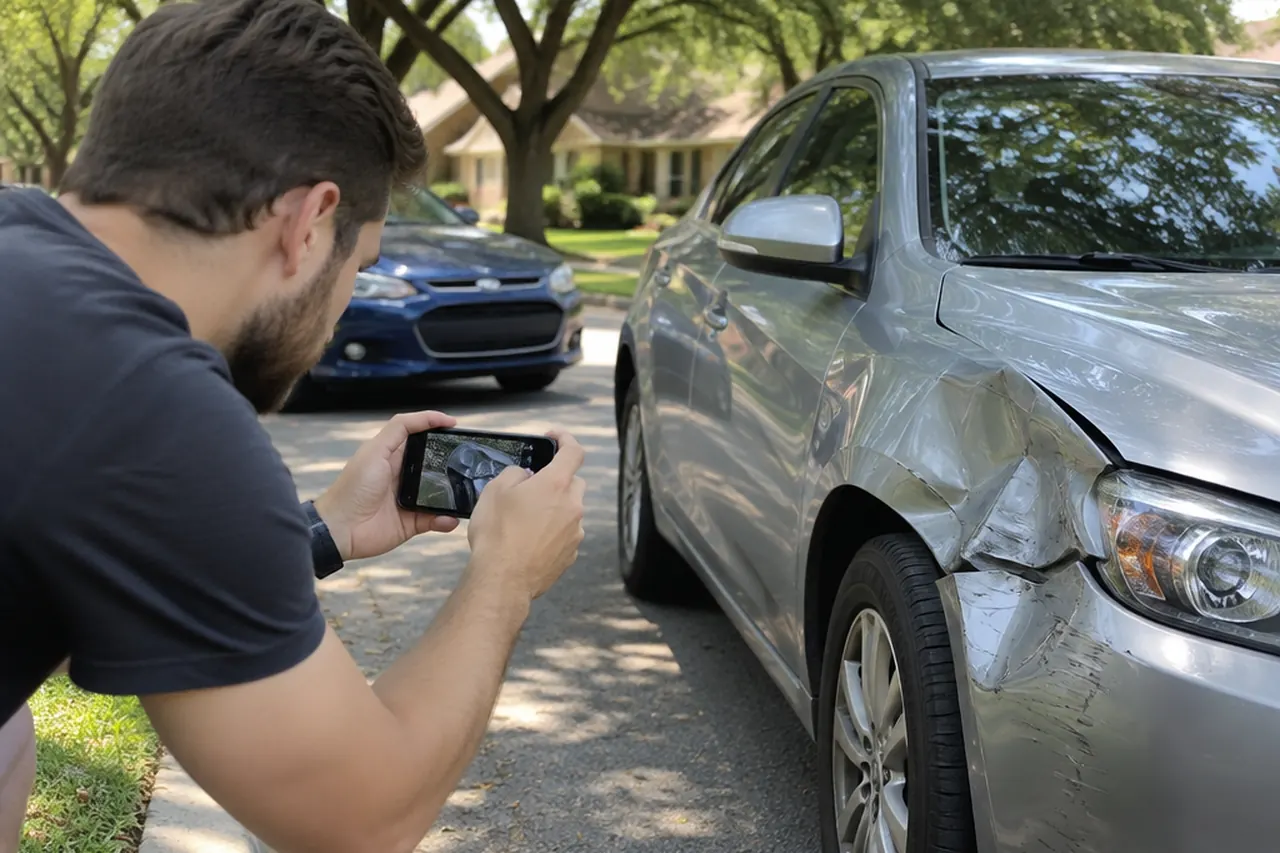
- Photograph both vehicles, the intersection, the signs and the signals.
- Ask nearby businesses to save their video right away.
- Write down what you saw before talking to any insurer.
When the other driver insists the light was theirs, it may help to talk to someone who has seen these disputes before. Ring (903) 357-5775 or send a few details through our free case review form, and a Texas injury attorney not affiliated with this site can take a look.
Sources
Questions & answers
Who is at fault in a T-bone accident?
Usually the driver who did not yield the right of way, such as someone who ran a stop sign or turned left in front of oncoming traffic. The other driver may share some fault if they were speeding or not paying attention.
Why are side-impact crashes so dangerous?
The side of a car has much less structure to absorb force than the front or back. People on the struck side can suffer head, chest, hip and pelvic injuries even at moderate speeds.
What if the other driver says I ran the stop sign?
Then outside evidence matters most: witnesses, business video, the damage pattern and the crash report. Gather it quickly, because video is often erased within days.
Related