- A trailer that sways, jackknifes or breaks free is usually a sign that something went wrong: speed, loading, the hitch or the chains.
- The driver towing it is the first person to look at, but the owner, a rental outfit or a parts maker may also share the blame.
- Photograph the hitch, the chains and the trailer before anyone hauls them away.
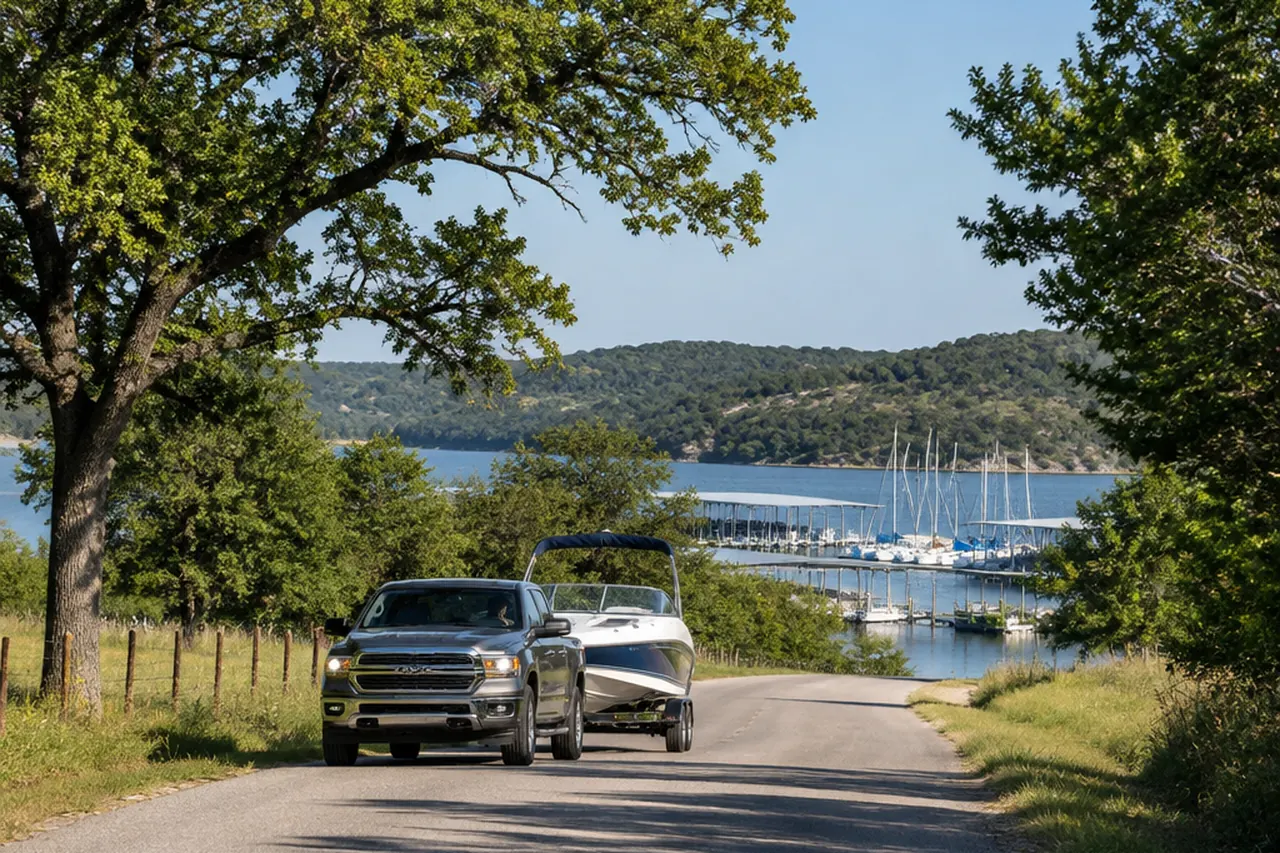
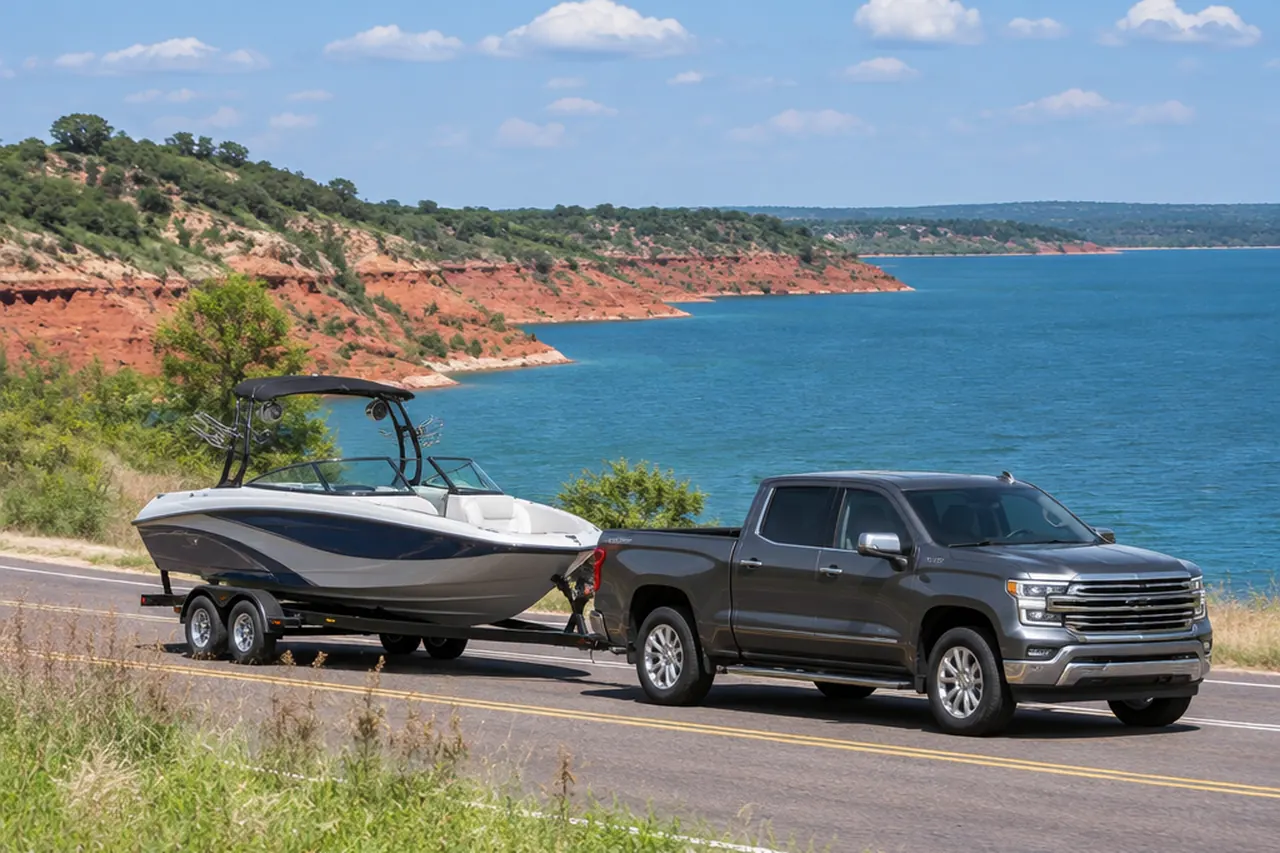
Lake Texoma pulls in boaters from all over North Texas and southern Oklahoma. On a summer Saturday, US-75, SH-91 out of Denison and FM 120 and FM 996 around Pottsboro carry a steady line of trucks with bass boats, pontoons and jet skis behind them. Most people tow safely. But a trailer adds weight, length and a whole new way for a vehicle to lose control.
How trailer wrecks tend to happen
Trailer crashes usually come down to a handful of failures:
- Sway. Too much speed, a gust of wind, a passing semi or weight loaded too far back can start a trailer rocking side to side. Once it gets going, it can pull the tow vehicle across lanes.
- Hitch failure. A coupler that was never latched, a ball that is the wrong size or a worn hitch can let the trailer drop off at speed.
- Missing or loose safety chains. Chains are the backup if the hitch lets go. Texas generally requires them on towed trailers. Without them, a loose trailer goes wherever momentum takes it.
- Brakes and lights. Heavier trailers generally need brakes of their own. Dead trailer lights mean nobody behind knows the driver is slowing down.
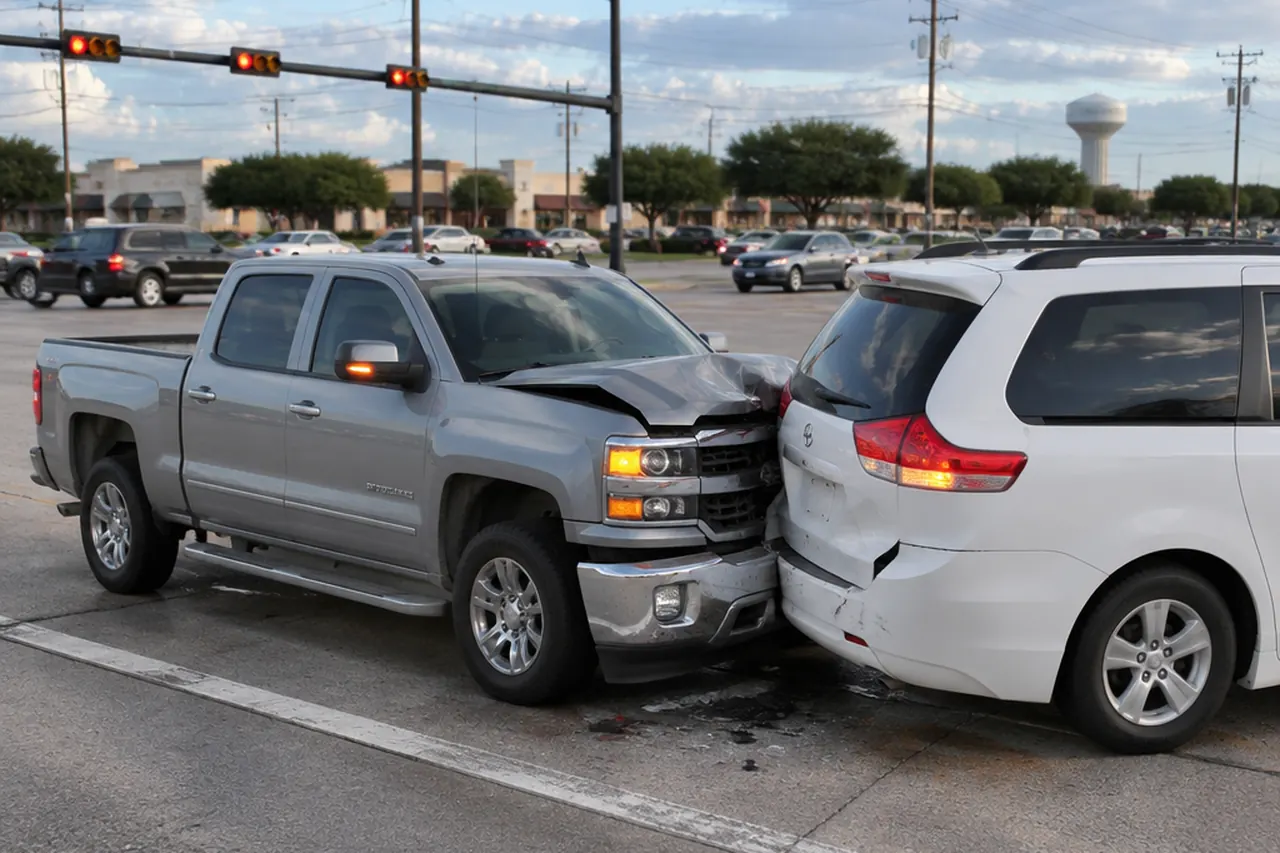
- Stopping distance. A loaded truck and boat need far more room to stop. Tailgating with a trailer is how many rear-end crashes start.
Who may be responsible
Fault depends on the facts, and more than one person can share it. Texas splits responsibility by percentage, so a claim can reach several parties at once.
The driver doing the towing
A driver pulling a trailer has to drive for the load: slower speeds, more following distance and a check of the hitch before pulling out. Texas law also expects every driver to leave room ahead to stop in time, and a boat hitched to the bumper does not shrink that duty.
Whoever owns the rig
If someone lent a rig to a driver they knew was not up to it, or kept a trailer with bad tires and no lights, the owner's own choices may come into play.
A rental or marina service
Businesses that rent trailers or hook up boats for customers may be responsible when their equipment or their work was faulty.
A parts maker or installer
A hitch, coupler or chain that broke under normal use may point to a defect or a bad install. Those claims often depend on keeping the broken part, so do not let it get thrown out.
What to save at the scene
Trailer evidence disappears fast. Wreckers clear the road, and the owner may haul the boat home that afternoon. If you can do it safely, or if a friend can:
- Take close-up photos of the hitch, ball, coupler and chains, attached or not.
- Photograph the trailer's tires, lights and plate, and the boat's registration numbers.
- Note where the trailer ended up and any marks on the road.
- Get names and numbers from other drivers who stopped. Lake traffic scatters quickly.
- Write down the case number the officer gives you.
Our what to do after a wreck checklist covers the rest.
Weekend traffic around Denison and Pottsboro
Lake days create their own patterns. Morning traffic piles up headed north, and late afternoon brings everyone back at once, often tired and sunburned, sometimes after a few drinks on the water. Two-lane roads near the marinas have little room to pass, so drivers get impatient behind a slow trailer. That mix leads to unsafe passing, sudden stops and wrecks at turn-ins and boat ramp entrances.
If you were hurt on one of these roads, see our pages on Pottsboro and Denison for local details.
How the insurance usually works
The tow vehicle's auto policy is often the main source of liability coverage for a crash involving an attached trailer. A boat policy may come into play too, depending on how it is written. Your own personal injury protection (PIP) may help with medical bills while fault gets sorted out. Our insurance claims guide walks through dealing with more than one insurer.
Questions about your own wreck? Ring (903) 357-5775 and a Texas injury lawyer, independent of this site, can talk it over with you at no cost.
Sources
Questions & answers
A boat trailer broke free and struck me. Is the tow driver always to blame?
Not in every case. Still, a trailer breaking free usually points to a problem with how it was hitched, chained, loaded or driven. The driver is often the first party responsible, and others may share the blame.
Does the truck's insurance cover the boat trailer?
Often, the tow vehicle's liability coverage applies to a crash involving an attached trailer, but policies vary. A separate boat or trailer policy may also apply.
What should I do with a broken hitch part?
Ask that it be kept, and photograph it. If a defect is suspected, the part itself can be key evidence, and an attorney can send a letter asking that it be preserved.
Related